
Top Startup Incubators and Accelerators

• 20 min
I'm a content specialist at Fively keen on writing fresh articles that can help out business and tech specialists. I love to conduct research, hold interviews, and spotlight sophisticated tech issues.
Explore the top 15 startup accelerators in 202, comparing Y Combinator, Techstars, 500 Global, and others: rankings, exit rates, and how to choose the best program for you.
In an increasingly competitive startup ecosystem, accelerators have emerged as powerful engines for early-stage growth — helping founders refine ideas, secure funding, and scale faster than their peers. According to the data provided by Techstars, top accelerator programs can significantly improve startup outcomes. Graduates of programs such as Techstars report that 74 % of participating startups go on to raise capital within three years, with average first raises often exceeding $1 million.
This guide breaks down what startup accelerators are, how they differ from incubators, and how we selected the top 15 programs for 2026.

Key Takeaways
- Startup accelerators are fixed-term, cohort-based programs that help early-stage companies scale quickly through mentorship, funding, and structured curriculum, often culminating in a Demo Day.
- Accelerators differ from incubators in stage, duration, and structure: accelerators typically require an MVP and run 3–6 months; incubators support idea-stage ventures and can run from six months to several years.
- The top 15 accelerators in 2026 were selected using Crunchbase and PitchBook data, alumni success rates, total funding raised, network quality, selectivity, and program structure.
- Exit rates and portfolio size vary widely: smaller, selective programs like AngelPad show higher exit rates; large global programs like Y Combinator and Techstars offer unmatched brand and network scale.
- Preparation matters: most top accelerators expect a strong MVP or validated concept, a clear pitch deck, traction metrics, and readiness for intensive interviews.
- After graduation, founders should focus on nurturing investor relationships, managing partnerships, scaling sales and team, and leveraging the alumni network for continued growth.
What Are Startup Accelerators?
A startup accelerator is a structured, cohort-based program designed to help early-stage companies rapidly scale their operations and develop a sustainable business model.
Unlike incubators, which tend to focus on nurturing very early ideas over longer periods, accelerators run for a fixed term (typically three to six months) and culminate in a pitch event (Demo Day) where founders present to investors. The core value proposition is to compress years of learning into months, provide access to investor networks, and deliver brand validation that can unlock follow-on funding and partnerships.
Most accelerator programs expect applicants to have at least a minimum viable product (MVP) or a validated concept that meets a clear market demand. They also look for a strong founding team with relevant experience. In exchange for equity or a small investment, participants receive intensive mentorship, curriculum, and introductions to angels and venture funds. Leading programs such as Y Combinator and Techstars have set the standard for what founders expect: hands-on guidance, peer community, and a path to higher valuations than they would typically achieve on their own.
 Services Account
Benefits of Accelerators
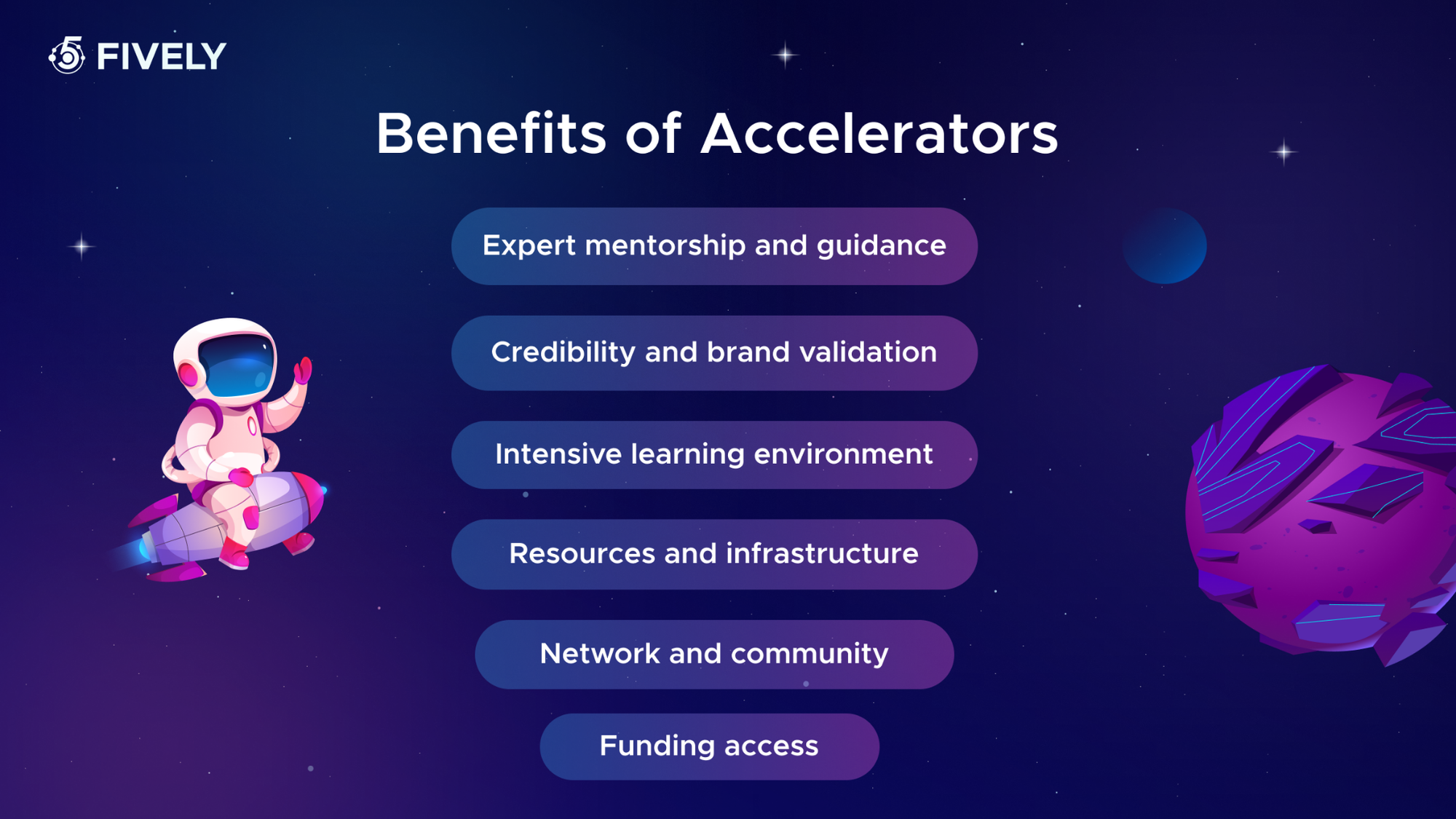
Startup accelerators offer a combination of resources and networking that can set early-stage companies up for long-term success. Key benefits include:
- Expert mentorship and guidance: Access to seasoned entrepreneurs, industry experts, and investors who provide hands-on advice on strategy, product, and growth. This mentorship helps startups avoid common pitfalls and refine their business models.
- Funding access: Seed funding or direct investment, plus introductions to investors for follow-on rounds. Many programs invest in exchange for equity; others are equity-free but still connect founders to capital.
- Credibility and brand validation: Graduating from a top accelerator signals quality to customers, partners, and future investors. The credential can open doors and improve terms in later fundraising.
- Intensive learning environment: Workshops, seminars, and structured curriculum on topics such as go-to-market, unit economics, and fundraising. Founders learn best practices and startup-specific frameworks in a compressed timeframe.
- Resources and infrastructure: Physical or virtual workspace, legal and accounting support, and access to tools and services (cloud credits, software, etc.) that reduce early-stage costs.
- Network and community: A cohort of peer founders, plus an alumni network of past graduates. This community supports collaboration, referrals, and long-term relationships with investors and operators.
What's the Difference Between a Startup Accelerator and a Startup Incubator?
Startup incubators and accelerators both support early-stage ventures, but they serve different stages and operate under different structures.
Incubators are designed for founders who are still developing their ideas, building initial teams, and running experiments to establish product-market fit. They often operate on a flexible timeline (from six months to five years) and provide grants, loans, workspace, legal and accounting support, and mentorship, helping to turn an idea into a viable business and preparing founders to raise vanture capital later.
Accelerators, by contrast, are built for startups that already have a minimum viable product and are on the path to product-market fit. A startup accelerator program often runs as a fixed-term program (typically 3–6 months) with competitive, periodic application cycles. Accelerators usually invest in exchange for equity and deliver intensive support: structured curriculum, dedicated mentors, and a Demo Day to connect graduates with investors.
Selection Methodology
We used a consistent set of criteria to identify the top startup accelerators. The following factors guided our selection:
- Crunchbase Rank and PitchBook data: We relied on Crunchbase and PitchBook for portfolio size, exit counts, funding raised, and organizational rankings to ensure our list reflects programs with verifiable track records.
- Alumni success rate: We weighed the percentage of portfolio companies that achieved a successful exit (acquisition or IPO) relative to total portfolio size. Programs with higher exit rates demonstrate a proven ability to help startups reach liquidity.
- Total funding raised: We considered the aggregate capital raised by accelerator alumni as a proxy for the program's ability to connect founders with investors and support follow-on rounds.
- Network and mentorship quality: We evaluated the depth and relevance of mentor networks, corporate partnerships, and investor connections. Programs that provide access to top-tier operators and investors scored higher.
- Acceptance rate and selectivity: We factored in how competitive each program is. Highly selective programs often attract stronger cohorts and can offer more tailored support.
- Program structure and support: We assessed curriculum, duration, equity terms, and the type of support offered (e.g., in-person vs. virtual, sector-specific vs. generalist). Programs with clear structure and meaningful resources were prioritized.
Best Startup Accelerators: Comparison Table
The table below gives a quick view of the top startup accelerators by portfolio size, number of exits, and exit rate. Exit rate is the share of portfolio companies that reached a successful exit (acquisition or IPO).
*Data is drawn from Crunchbase and public disclosures; figures may vary by reporting date. Programs marked with "—" are either newer or do not disclose exit data in the same format.
15 Top Startup Accelerators in 2026
Y Combinator
Location: Silicon Valley, California (batches run twice per year with remote participation options)
Crunchbase: Y Combinator
Y Combinator is widely considered the gold standard for startup accelerators. Founded in 2005, it has invested in thousands of companies and helped define the modern accelerator model: a three-month intensive program, seed funding in exchange for equity, and a culminating Demo Day where founders pitch to an invite-only audience of investors. YC's brand and network give graduates a significant advantage in follow-on fundraising and partnerships.
Industries: Technology, SaaS, marketplaces, fintech, healthcare, AI, and other high-growth sectors.
Program highlights:
- Up to $500,000 in funding on standard terms ($125k for 7% plus uncapped SAFE for $375k)
- Three-month intensive program with weekly group sessions and office hours
- Access to a vast alumni network and top-tier investors
- Startup School and other resources for the broader founder community
Portfolio / Exits / Exit rate: 6,047 portfolio companies; 668 exits; 11.05% exit rate (Crunchbase).
Notable alumni: Airbnb, Dropbox, Stripe, Coinbase, DoorDash, Reddit, Instacart, OpenSea.
By the way, this employee engagement optimization startup we recently partnered with is also backed by Y Combinator:
 Services Account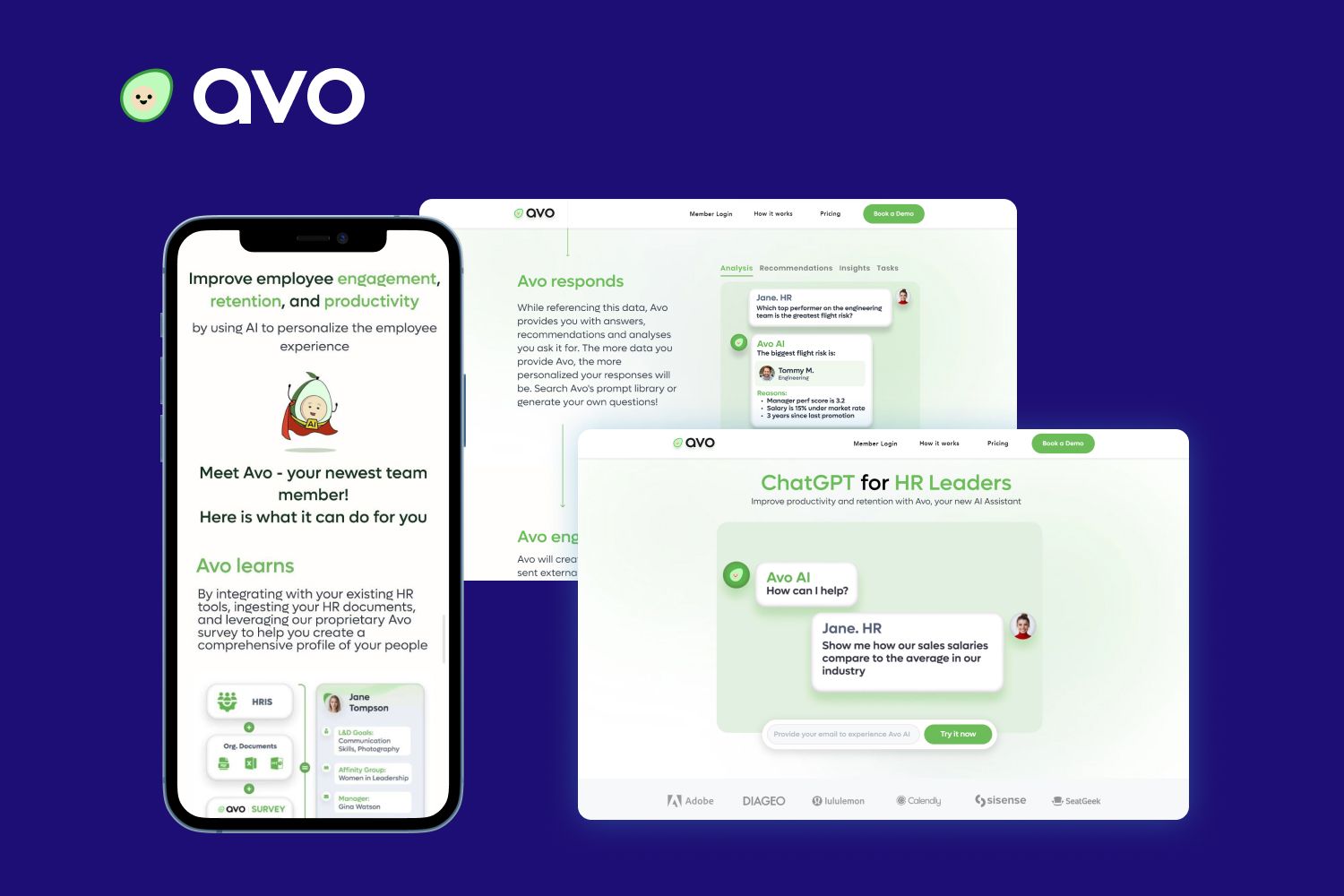
Techstars
Location: Global (50+ accelerator programs across North America, Europe, and other regions)
Crunchbase: Techstars
Techstars runs one of the largest global accelerator networks, with programs tailored by city and industry. Founded in 2006, it emphasizes mentorship: each startup is matched with mentors who provide hands-on guidance on product, growth, and fundraising. Techstars also runs Startup Week and Startup Weekend, building community beyond the core program.
Industries: SaaS, fintech, healthtech, proptech, foodtech, and other technology-driven sectors.
Program highlights:
- Up to $120,000 in funding for 6% equity (terms vary by program)
- Three-month program with intensive mentorship and access to perks
- Dozens of vertical and geographic programs (e.g., Techstars NYC, Farm to Fork, Colliers Proptech)
- Global alumni network and corporate partnerships
Portfolio / Exits / Exit rate: 4,896 portfolio companies; 562 exits; 11.48% exit rate.
Notable alumni: SendGrid, ClassPass, Outreach, SalesLoft, PillPack.

500 Global
Location: Global (flagship in San Francisco; programs in Latin America, Asia, and other regions)
Crunchbase: 500 Global
500 Global (formerly 500 Startups) is among the most active early-stage investors in the world, with a mission to discover and back talented entrepreneurs across many markets. The flagship accelerator runs twice per year and focuses on growth marketing, customer acquisition, and lean startup practices. The firm has invested in thousands of companies across more than 75 countries.
Industries: Early-stage startups across sectors including fintech, healthtech, e-commerce, and deep tech.
Program highlights:
- $150,000 for 6% equity in the flagship program
- Four-month program with intensive curriculum and mentor access
- Regional programs (e.g., 500 LatAm) for geography-specific support
- Strong focus on diversity and inclusion in the startup ecosystem
Portfolio / Exits / Exit rate: 2,455 portfolio companies; 416 exits; 16.95% exit rate.
Notable alumni: Udemy, Canva, Credit Karma, Talkdesk, Grab.
Plug and Play
Location: Silicon Valley headquarters; 30+ locations worldwide (U.S., Europe, Asia, Middle East)
Crunchbase: Plug and Play
Plug and Play is a global innovation platform that connects startups with large corporations, investors, and industry experts. It runs vertical-specific accelerator programs in fintech, insurtech, healthtech, mobility, IoT, and other sectors. Unlike many accelerators, Plug and Play often does not take equity upfront, preferring to invest in later rounds on standard terms.
Industries: Fintech, insurtech, healthtech, mobility, IoT, enterprise tech, retail, and fashion tech.
Program highlights:
- Corporate partnerships and pilot opportunities with blue-chip companies
- Typically no equity taken; investment in future rounds
- 12-week programs with sector-specific curriculum and networking
- Access to 500+ corporate partners and 300+ VC investors in the ecosystem
Portfolio / Exits / Exit rate: 1,826 portfolio companies; 201 exits; 11.01% exit rate.
Notable alumni: PayPal, Dropbox, LendingClub, N26, Honey.
SOSV
Location: Global (programs include HAX in Shenzhen/Newark, IndieBio in San Francisco/New York, dlab, Orbit Startups)
Crunchbase: SOSV
SOSV is a multi-stage venture firm that runs several accelerator programs focused on deep tech and impact. HAX supports hardware, robotics, and connected devices; IndieBio focuses on life sciences and planetary health; dlab covers web3 and blockchain; Orbit targets emerging markets. SOSV invests in roughly 150 companies per year through three- to six-month programs.
Industries: Hardware, robotics, life sciences, climate tech, web3, and emerging-market tech.
Program highlights:
- Investment via convertible instruments (e.g., ACE); terms vary by program
- Hands-on support: labs, maker spaces, and technical teams for product development
- Global staff of engineers, designers, and scientists
- Programs range from 3 to 6 months depending on track
Portfolio / Exits / Exit rate: 1,447 portfolio companies; 86 exits; 5.94% exit rate.
Notable alumni: Getaround, Storyful, NotCo, Perfect Day, Andela.
AngelPad
Location: San Francisco and New York City
Crunchbase: AngelPad
AngelPad is a highly selective seed accelerator founded by ex-Googlers. It accepts only about 15 teams per cohort and runs a 12-week program focused on product-market fit and customer acquisition. It has been ranked the number one U.S. accelerator by MIT's Seed Accelerator Benchmark and is often described as the "Anti-Y Combinator" for its small cohorts and hands-on style.
Industries: B2B, SaaS, marketplaces, and broad tech verticals (healthcare, AI, data, drones, etc.).
Program highlights:
- $120,000 per company for approximately 7% equity
- 12-week program with intensive, personalized mentorship
- Small cohorts (about 15 teams) for close support
- Emphasis on finding product-market fit and first customers
Portfolio / Exits / Exit rate: 120 portfolio companies; 43 exits; 35.83% exit rate.
Notable alumni: Postmates, Buffer, Pipedrive, AllTrails, Cruise Automation (acquired by GM).
a
Location: San Francisco, California
Crunchbase: Alchemist Accelerator
Alchemist is the leading accelerator for enterprise-focused startups—companies that sell to other businesses rather than consumers. It offers a six-month program with a strong emphasis on enterprise sales, customer development, and fundraising. The network includes thousands of mentors and investors with experience in B2B and enterprise software.
Industries: Enterprise software, fintech, climate tech, industrial IoT, and B2B SaaS.
Program highlights:
- Approximately $35,000 for 5% equity (terms may vary)
- Six-month program with a focus on enterprise sales and customer acquisition
- Access to corporate partners for pilots and enterprise customers
- World's longest-standing program focused on enterprise startups
Portfolio / Exits / Exit rate: 533 portfolio companies; 68 exits; 12.76% exit rate.
Notable alumni: MoEngage, Rigetti Computing, several acquired by Dropbox, Cisco, and GE.
MassChallenge
Location: Boston headquarters; programs in the U.S., Mexico, Israel, Switzerland, and other regions
Crunchbase: MassChallenge
MassChallenge is one of the largest global accelerators and operates as a nonprofit. Its programs are equity-free, allowing founders to retain full ownership while accessing mentorship, workspace, and networking. MassChallenge focuses on high-impact startups across fintech, healthtech, and sustainability, with a variety of challenge-based and early-stage programs.
Industries: Fintech, healthtech, sustainability, and impact-driven startups across sectors.
Program highlights:
- Equity-free; no equity taken from participants
- Multiple program formats: early-stage accelerators, challenges, bridge programs
- Global network with programs in several countries
- Emphasis on inclusive innovation and diverse founders
Portfolio / Exits / Exit rate: 3,069 portfolio companies; 242 exits; 7.89% exit rate.
Notable alumni: Numerous high-impact ventures in health, sustainability, and fintech.

Google for Startups
Location: Global (programs in multiple regions; many are virtual or hybrid)
Crunchbase: Google for Startups
Google for Startups runs accelerator programs that provide technology, mentorship, and access to Google's resources without taking equity. Programs are typically three months and focus on product development, technical scaling, and growth. Selected startups receive tailored support from Google engineers and experts.
Industries: Technology startups with scalable products; focus on product and technical development.
Program highlights:
- No equity taken
- Three-month program with 1:1 and group mentorship
- Access to Google's technology, cloud credits, and expertise
- Programs available in multiple regions and verticals
Portfolio / Exits / Exit rate: 1,694 portfolio organizations; 97 exits; 5.73% exit rate.
Notable alumni: Akeptus, TackleAI, Trustible, and many others across regions.

A growing
Location: United States (recent cohorts in Los Angeles and San Francisco; in-person)
Crunchbase: Andreessen Horowitz (Speedrun is a program of a16z)
a16z Speedrun is a 12-week, in-person accelerator from Andreessen Horowitz for founders who want to move fast. Selected startups receive significant investment, partner credits, and access to the full a16z network. The program is designed to turn ambitious ideas into scalable companies with direct support from operators and investors.
Industries: Technology; open to pre-seed to seed stage across sectors.
Program highlights:
- Up to $1 million in investment per startup
- More than $5 million in partner credits
- 12-week in-person program in a single city per cohort
- Hands-on guidance from a16z operators and entrepreneurs; Demo Day for top investors
Portfolio / Exits / Exit rate: Newer program; exit data not yet comparable to established accelerators.
Notable alumni: A growing cohort of Speedrun graduates.
LAUNCH
Location: California (program is primarily virtual to serve founders outside the Bay Area)
Crunchbase: LAUNCH
LAUNCH is a pre–Series A accelerator that selects only seven startups per cohort for a 14-week program. It functions as an accelerator, seed fund, and syndicate, investing in founders over the long term. The model is largely virtual, enabling founders outside Silicon Valley to access capital and mentorship.
Industries: SaaS, consumer subscription, fintech, and technology.
Program highlights:
- $125,000 cash for 7% equity with option to invest in future rounds
- 14-week program; small cohorts of seven startups
- Primarily virtual format
- Combines accelerator, seed fund, and syndicate for ongoing support
Portfolio / Exits / Exit rate: 30+ cohorts funded; detailed exit stats not uniformly disclosed.
Notable alumni: Diverse SaaS, fintech, and consumer subscription companies.

,
Location: Global (Europe headquarters; 80+ programs in 20+ countries)
Crunchbase: Startupbootcamp
Startupbootcamp is a global network of industry-focused accelerators. Each program runs for three months and targets a specific sector such as fintech, healthtech, energy, sustainability, or deeptech. The organization connects startups with corporate partners, mentors, and investors in their industry.
Industries: Fintech, healthtech, smart energy, digital health, IoT, deeptech, robotics, and more.
Program highlights:
- 6–8% equity for investment (varies by program)
- Three-month programs, industry-specific curriculum, and mentors
- 80+ programs across 20+ countries
- First accelerator network to list on a stock exchange
Portfolio / Exits / Exit rate: 1,000+ startups accelerated; portfolio valuation in the billions (euros).
Notable alumni: Varies by program; strong presence in European and emerging markets.

EWOR
Location: Europe (virtual with intensive retreats and co-working options)
Crunchbase: EWOR
EWOR is an elite accelerator that accepts only the top 0.1% of applicants. Founded by entrepreneurs who have built and exited companies worth more than €12 billion collectively (e.g., SumUp, Adjust, ProGlove), it offers an Ideation Fellowship for pre-idea founders and a Traction Fellowship for startups with early revenue up to €1M ARR. The program combines remote support with retreats and up to two months of co-working at premium locations.
Industries: Broad tech; deep tech and early-stage startups; serial and first-time founders.
Program highlights:
- Up to €150,000 in immediate funding
- Ideation Fellowship (pre-idea) and Traction Fellowship (early revenue)
- Top 0.1% acceptance rate; intensive mentorship from successful founders
- Hybrid: virtual plus retreats and co-working
Portfolio / Exits / Exit rate: Selective cohorts; reported outcomes include higher valuations and 130% more funding than typical pre-seed startups.
Notable alumni: High-potential ventures in EWOR's selective portfolio.
the
Location: Stanford, California (Stanford-affiliated founders only)
Crunchbase: StartX
StartX is a nonprofit startup accelerator and community for Stanford founders. It does not take equity and offers mentorship, peer community, grant funding, and access to Stanford resources. Founders must be admitted to the full-time accelerator or student fellowship to join the community.
Industries: Technology and MedTech; broad focus for Stanford-affiliated ventures.
Program highlights:
- Equity-free
- Community, mentorship, resources, and peer education
- Grant funding and support across stages from idea to scale
- Access to the Stanford network, talent, and research
Portfolio / Exits / Exit rate: 2,500+ Stanford founders; 165+ companies valued over $100M; 18 valued over $1B. Total portfolio valuation $40B+.
Notable alumni: Lime, Patreon, Solugen, and many other Stanford-originated companies.

Gener8tor
Location: United States (national footprint with 75+ programs)
Crunchbase: Gener8tor
Gener8tor is a nationally ranked venture firm and accelerator platform that runs startup accelerators, corporate programs, skills accelerators, and fellowships. It emphasizes access to opportunity regardless of background and operates across many cities and verticals.
Industries: Broad; includes tech startups, corporate innovation, and sector-specific tracks.
Program highlights:
- Investment terms vary by program
- 75+ programs: startup accelerators, corporate programming, conferences, fellowships
- Mission-driven focus on diversity of founders and geography
- Mix of in-person and virtual options
Portfolio / Exits / Exit rate: 254 portfolio companies; 18 exits; 7.09% exit rate.
Notable alumni: Diverse set of companies across Gener8tor's national network.
 Services Account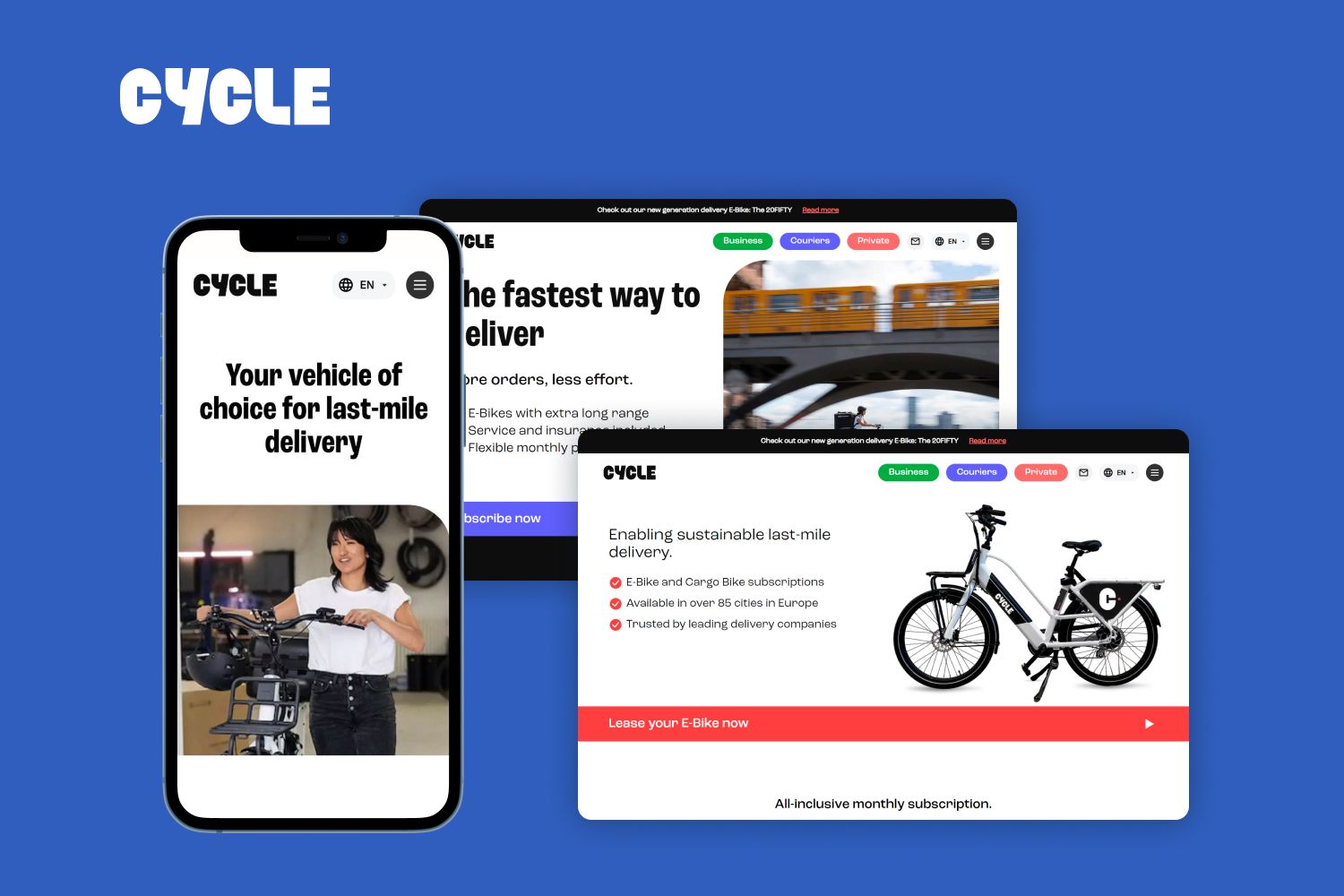
How to Choose the Right Startup Accelerator
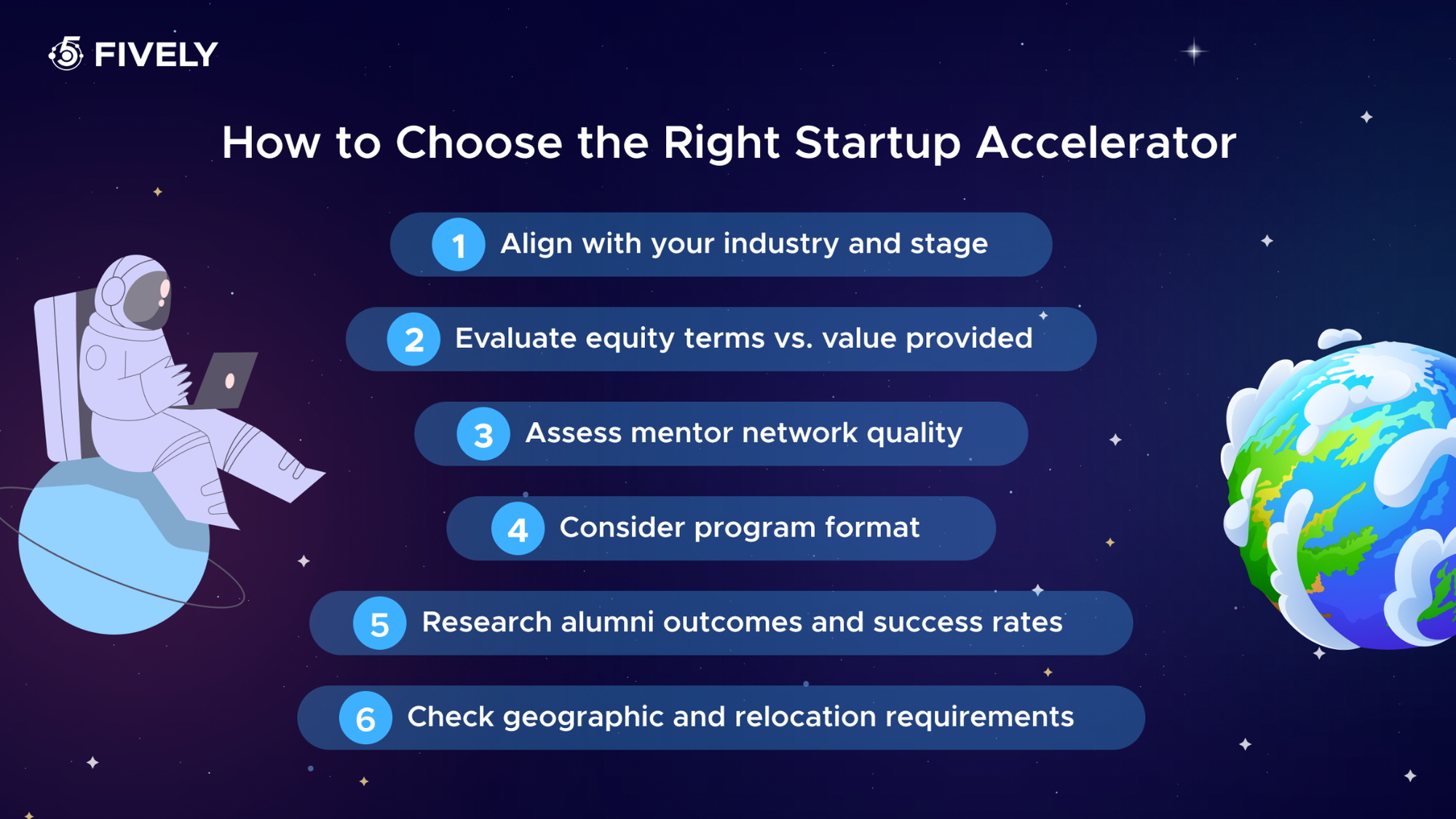
Choosing the right accelerator can have a lasting impact on your startup's trajectory. These six factors will help you narrow the field and find a program that fits your stage, industry, and goals.
- Align with your industry and stage: Many accelerators specialize by sector (e.g., fintech, healthtech, enterprise) or stage (pre-seed, seed). Apply to programs that actively invest in your space and stage; a mismatch wastes time and can dilute equity without relevant support.
- Evaluate equity terms vs. value provided: Compare the size of the check and the percentage of equity taken against the value of the network, mentorship, and brand. A program that takes more equity but delivers stronger investor access and credibility may still be the better deal.
- Assess mentor network quality: Look at who the mentors are—experienced operators and investors in your domain matter more than a long list of names. Check whether alumni report real access to mentors and whether the program facilitates meaningful introductions.
- Consider program format: In-person programs often create stronger bonds and accountability but require relocation. Virtual or hybrid programs offer flexibility but may offer less intensity. Choose based on your team's constraints and how you learn best.
- Research alumni outcomes and success rates: Exit rates, follow-on funding, and alumni testimonials indicate whether the program actually helps startups succeed. Use Crunchbase and PitchBook to verify portfolio and exit data.
- Check geographic and relocation requirements: Some accelerators require you to be on-site for the full program. If you cannot relocate, focus on virtual or hybrid options, or programs in your region.
How to Prepare to Apply for Accelerators
The application process for top accelerators is competitive. Preparing in advance will improve your odds and help you present your startup clearly.
- Have a strong MVP or validated concept: Most accelerators expect at least a minimum viable product — a version of your product with enough functionality to gather real user feedback. If you do not have an MVP yet, focus on building one or demonstrating clear validation (e.g., letters of intent, pilot customers) before applying. The MVP is often a gate: programs want to work with teams that have something to iterate on, not just an idea.
- Prepare a pitch deck: Applications usually require a deck that covers the problem, solution, market size, business model, traction, team, and ask. Keep it concise (often 10–15 slides) and make the narrative easy to follow. Highlight metrics and milestones that show progress.
- Record a video pitch if required: Many programs ask for a short video of the founder(s) explaining the startup. Practice until you can deliver a clear, confident pitch within the time limit. Show the team and the problem you are solving.
- Demonstrate traction: Revenue, monthly active users, or other engagement metrics are stronger signals than sign-ups or beta users alone. If you have early customers or pilots, say so explicitly and quantify where possible.
- Show understanding of market and KPIs: Be ready to explain your unit economics, customer acquisition strategy, and key performance indicators. Programs want founders who speak the language of growth and can execute on feedback.
- Prepare for interviews: Shortlisted applicants are often invited to interviews. Research common questions (e.g., YC Interview Guide) and practice with a partner. Be ready to go deep on the product, the market, and the team.
The Critical Role of MVP
Many accelerator programs require companies to have a viable product or an operational business model before they can be accepted. They want to work with founders who have something real to refine — customers to talk to, usage data to analyze, and a product to iterate on. Without an MVP, it is harder to demonstrate traction, explain unit economics, or show that you can execute. Building a minimum viable product is therefore one of the most important steps you can take before applying.
If you have a strong idea but lack the technical capacity or time to build an MVP in-house, working with a dedicated MVP development partner can help.
Fively MVP development services offer full-cycle support:
- business analysis and MVP consulting to refine your idea and prioritize features,
- prototype design to validate the concept with stakeholders,
- engineering to build a stable foundation for your product,
- and evolution support to turn the MVP into a market-ready solution.
A well-built MVP not only strengthens your accelerator application but also gives you a clearer path to product-market fit and follow-on funding. For founders who need to move quickly and meet accelerator expectations, partnering with an experienced MVP development team can bridge the gap between idea and acceptance.
What Happens After You Graduate from a Startup Accelerator?
Graduating from an accelerator is a milestone, but the work of scaling really begins afterward. The following priorities will help you make the most of your post-program momentum.
- Track and nurture investor relationships: Keep a clear record of your most important backers and key conversations. Log interactions, set reminders for follow-ups, and keep those relationships warm so you can return for the next round when the time is right.
- Manage partnerships and collaborations: Centralize communications with corporate and channel partners. Use your accelerator network to identify new partnership opportunities and move quickly when introductions are made.
- Streamline sales and customer acquisition: Put in place lead tracking, pipeline management, and basic analytics. Use data to prioritize outreach and improve conversion so you can prove growth in the next fundraising cycle.
- Scale your team: As you hire, use clear documentation and onboarding so new team members get up to speed quickly. Keep the founding team aligned on strategy and metrics as the organization grows.
- Leverage the alumni network: Stay in touch with your cohort and the broader accelerator alumni community. Share learnings, make introductions, and tap the network for advice, customers, and future investors. The relationships you build during and after the program often pay off for years.
 Services Account
Need Help With A Project?
Drop us a line, let’s arrange a discussion
Frequently Asked Questions
Y Combinator is often considered the gold standard for brand, network, and follow-on fundraising, but smaller, more selective programs like AngelPad have achieved higher exit rates in some rankings. If your priority is maximum visibility and investor access, a top-tier global program may fit. If you want intensive, hands-on mentorship in a specific sector, a focused accelerator (e.g., Alchemist for enterprise, SOSV's HAX for hardware) might be a better match.
Consider an accelerator when you have a minimum viable product (or strong validation) and a founding team ready for rapid, structured growth. Accelerators are built for companies that can benefit from a few months of intensive support and are prepared to pitch investors at the end.
Consider an incubator when you are earlier: still refining the idea, building the team, or running experiments to find product-market fit. Incubators offer more flexible timelines and are suited to founders who need space and support before they are ready for an accelerator.
Yes. Many founders apply to several programs in parallel. Be strategic: target programs that fit your stage and sector, and be mindful of cohort dates so you do not commit to overlapping programs. If you are accepted to more than one, compare terms, network quality, and fit before deciding. Applying to multiple accelerators can also sharpen your pitch and materials.
It depends on the program. Some accelerators (e.g., Y Combinator, Techstars in-person programs, a16z Speedrun) expect or require you to be on-site for the duration. Others offer virtual or hybrid formats (e.g., LAUNCH, many Google for Startups programs), so you can participate from elsewhere. Check each program's requirements before applying, and factor relocation into your decision if you cannot or prefer not to move.
Yes. Most accelerators allow and even encourage reapplication in a later cohort. Use feedback if it is offered, improve your product and traction, and apply again when you have a stronger story. Many successful companies were accepted only after one or more prior rejections.


