
Best MVP Development Companies for Startups in 2026

• 20 min
I'm a content specialist at Fively keen on writing fresh articles that can help out business and tech specialists. I love to conduct research, hold interviews, and spotlight sophisticated tech issues.
Shortlist the best MVP development companies for your next project. Our guide breaks down top agencies, global pricing ranges, and selection criteria to launch your product fast.
Bringing a digital product to market in 2026 requires navigating tight deadlines, strict quality bars, and financial exposure. Leading MVP development companies empower startups and enterprises to stress-test concepts early, deliver a dependable minimum viable product, and map a realistic path toward growth.
In this guide, we applied a metrics-backed ranking methodology that weighs portfolio depth, verified reviews, and consistent delivery discipline across dozens of agencies. You will find a rapid-scan comparison table that lets you narrow down a top MVP development company in minutes, followed by in-depth profiles revealing specializations, core services, and the factors that distinguish each MVP software development company.
Whether your organization is an early-stage venture or a corporate innovation unit testing a fresh offering, a capable development partner enables you to build an MVP, confirm market appetite, and safeguard cash reserves.
Our lens stays on MVP development agencies that merge software engineering, user-centric design, and end-to-end product development services inside a transparent, results-oriented workflow. The intent is to equip you to choose the right MVP development partner while setting pragmatic expectations for development costs, schedules, and output standards. Apply the evaluation criteria and reference checklists in the sections ahead to benchmark agencies, pinpoint the right MVP development company that propels startups, and proceed with assurance.
How We Ranked the Best MVP Development Companies
We applied a data-driven ranking methodology to identify the best MVP development companies that genuinely deliver results for startups. Our focus landed on startup-specific factors: cost-effectiveness, technical expertise, a clear MVP focus, and a product-oriented mindset that goes beyond code delivery.
We targeted mid-sized agencies that balance technical capability with personalized attention—firms large enough to field experienced development teams yet nimble enough to avoid enterprise-level bureaucracy. We excluded product vendors and concentrated on custom software development specialists with verifiable track records. Our research drew primarily from Clutch, G2, GoodFirms, and TechReviewer, prioritizing companies with verified client outcomes and detailed feedback that went beyond generic praise.
Portfolio
A compelling portfolio demonstrates product variety, engineering sophistication, and verified shipments across web development and mobile app development. We examined whether teams delivered custom MVP development across multiple industries—fintech, healthcare, SaaS, and ecommerce—since a diverse portfolio signals adaptability. Companies that showed consistent results and documented measurable business impact earned higher scores.
Client Reviews and Reputation
We analyzed review patterns and scores on Clutch, G2, and GoodFirms to verify each agency's standing and responsiveness. Beyond star ratings, we read actual client comments to assess how teams handle scope changes, budget overruns, and communication gaps. Steady, detailed positive feedback serves as the most dependable indicator of a reliable MVP development partner.
Technical and Strategic Depth
Elite MVP development agencies fuse engineering excellence with product strategy rather than treating requirements as a checklist. We favored firms offering architecture counsel, roadmap design, and AI or data proficiency when applicable. Teams that challenge assumptions and propose smarter solutions—rather than simply building what is requested—scored highest in this category.
Case Studies
Thoroughly documented case studies reveal how an MVP development company guides startups to mitigate risk and test assumptions before full-scale investment. We gave preference to teams disclosing measurable outcomes, key performance metrics, and lessons learned from past engagements. Vague success claims without numbers or timelines were treated as red flags.
Communication
Precise planning, candid reporting, and stakeholder synchronization are vital across the development process and beyond. We shortlisted firms that stress tight collaboration, assign a dedicated point of contact, and maintain transparent progress updates. Poor communication is the most common reason MVP projects derail, so responsiveness weighed heavily in our assessment.
Development Process
Agile development, lean discovery, and swift feedback cycles form the backbone of successful MVP delivery. We sought structured sprints, thorough QA testing, and a formalized post-launch handoff that prepares founders for the next growth phase. Agencies without a clearly documented process or iterative methodology were excluded from our final list.
Quick Comparison: Top 15 MVP Development Companies
Here is a side-by-side snapshot of the top MVP development companies and MVP software development companies. Figures represent common ranges drawn from agency disclosures and review platforms; confirm specifics during vendor evaluation.
*according to companies’ profiles on Clutch.
Treat this table as an initial filter, then validate specifics in a discovery conversation. Hourly rates and project minimums fluctuate by geography, engagement structure, and schedule. When seeking a startup MVP development company geared toward rapid shipment, lean toward teams with lower minimums and sharp UX skills. When pursuing a leading MVP development company built for enterprise governance, opt for firms charging premium rates yet demonstrating rigorous QA and security controls.
Also, reputable MVP development companies typically discuss scope tradeoffs openly and articulate risk-reduction tactics throughout the development process. Aim for a balanced shortlist of three to five agencies spanning varied price bands and collaboration styles.
Top 15 MVP Development Companies: Detailed Profiles
Every profile adheres to a uniform layout for straightforward comparison of services, capacity, and value. These MVP development services are frequently engaged by startups and enterprises intent on shipping an MVP swiftly while preserving build quality.
Fively
Year founded: 2018
Hourly rate: $50 - $99 / hr
Team size: 50 - 249
Min project size: $25,000+
Clutch rating: 5
Key services: MVP development services, UI/UX, web development, mobile app development.
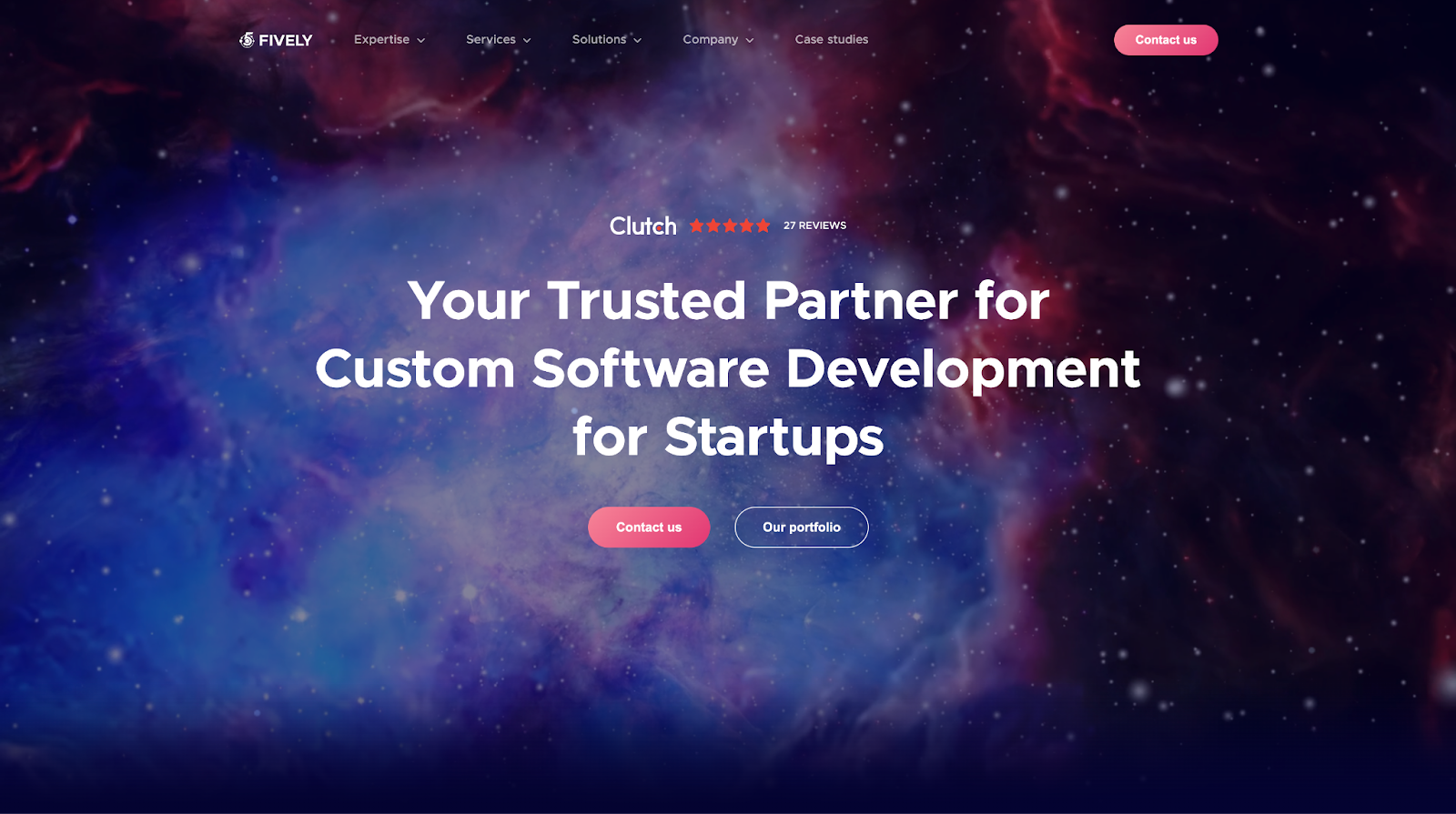
Fively is a product-focused agency known for building lean MVPs for SaaS and digital platforms. The team of highly experienced engineers emphasizes rapid validation, lean discovery, and a pragmatic roadmap.
Why we chose them: Fively stands out for its case-driven delivery approach combined with highly responsive communication. Their portfolio includes a wide range of real-world MVP and scale-up projects, such as Geeks of Finance, a trading and market analytics platform with real-time dashboards and proprietary data models; Uniqkey, an identity and access management automation solution; Swordfish, an identity verification platform focused on secure, compliant workflows, and others. These engagements showcase Fively’s ability to support both early-stage validation and complex, multi-tenant platforms built for fast market entry.
Notable strengths: Fively excels at accelerated prototyping and short feedback cycles that significantly reduce early-stage uncertainty. Beyond core development, their teams frequently support startups with analytics setup, onboarding experiments, and retention optimization. Case studies like MessageBuy, an abandoned cart recovery browser extension for Shopify, further highlight their ability to deliver focused, high-impact solutions that directly support business growth.
AgileEngine
Year established: 2010
Hourly rate: $25 - $49 / hr
Team size: 1,000 - 9,999
Min project size: $25,000+
Clutch rating: 5
Key services: Dedicated teams, product development, custom software development, QA automation
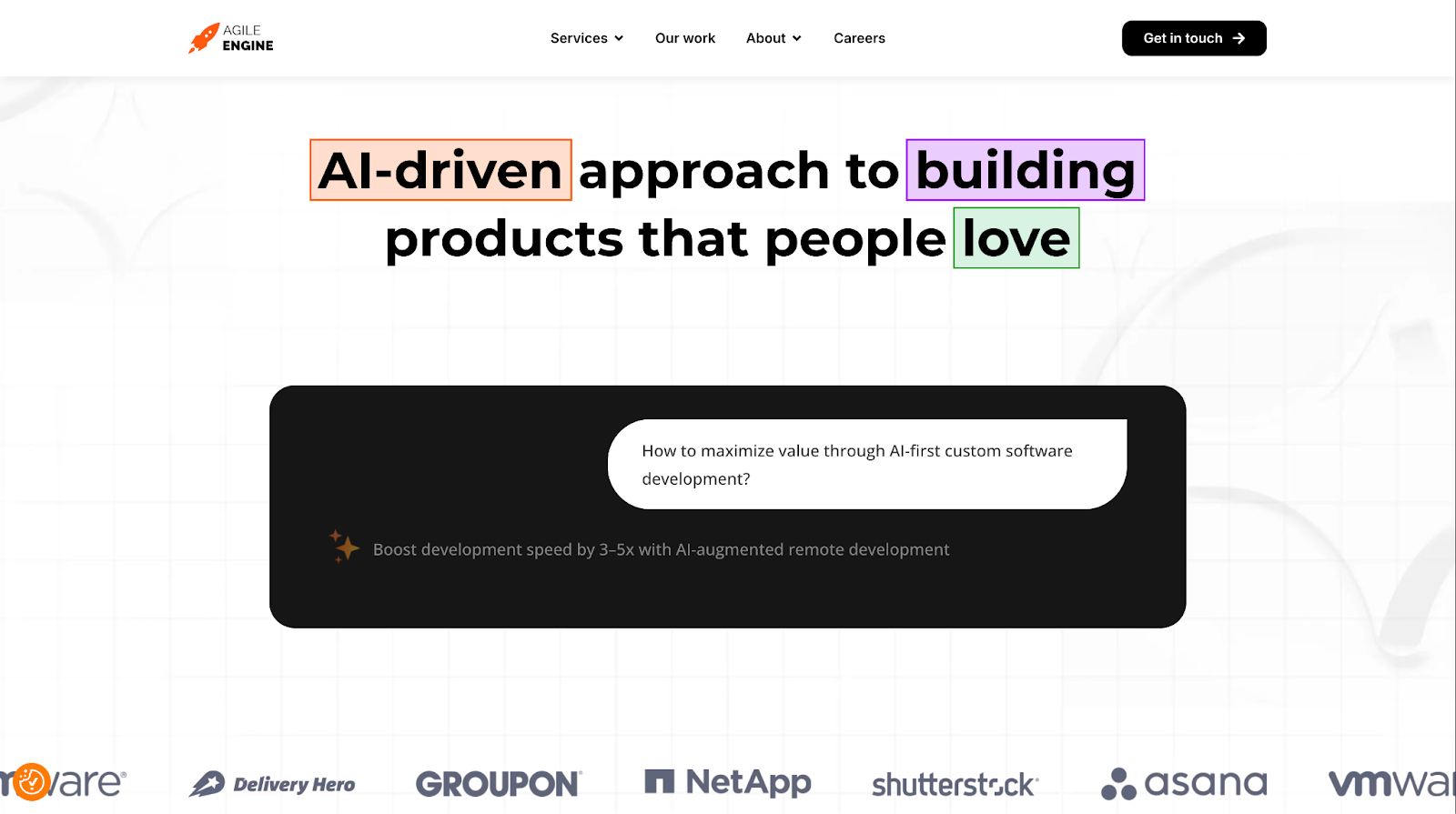
AgileEngine operates as a worldwide development partner boasting substantial engineering bandwidth and precise talent pairing. They guide startups in progressing from MVP to production-grade software through dependable execution.
Why we chose them: The firm delivers engineering sophistication, seasoned workflows, and adaptable team expansion suited to startups and enterprises alike.
Notable strengths: Extensive talent reserves combined with exacting engineering benchmarks underpin rapid expansion. This appeals to teams anticipating aggressive scaling and sustained product development.
Code District
Year founded: 2017
Hourly rate: $25 - $49 / hr
Team size: 250 - 999
Min project size: $10,000+
Clutch rating: 5
Key services: Web apps, mobile apps, MVP development agencies services, ecommerce.
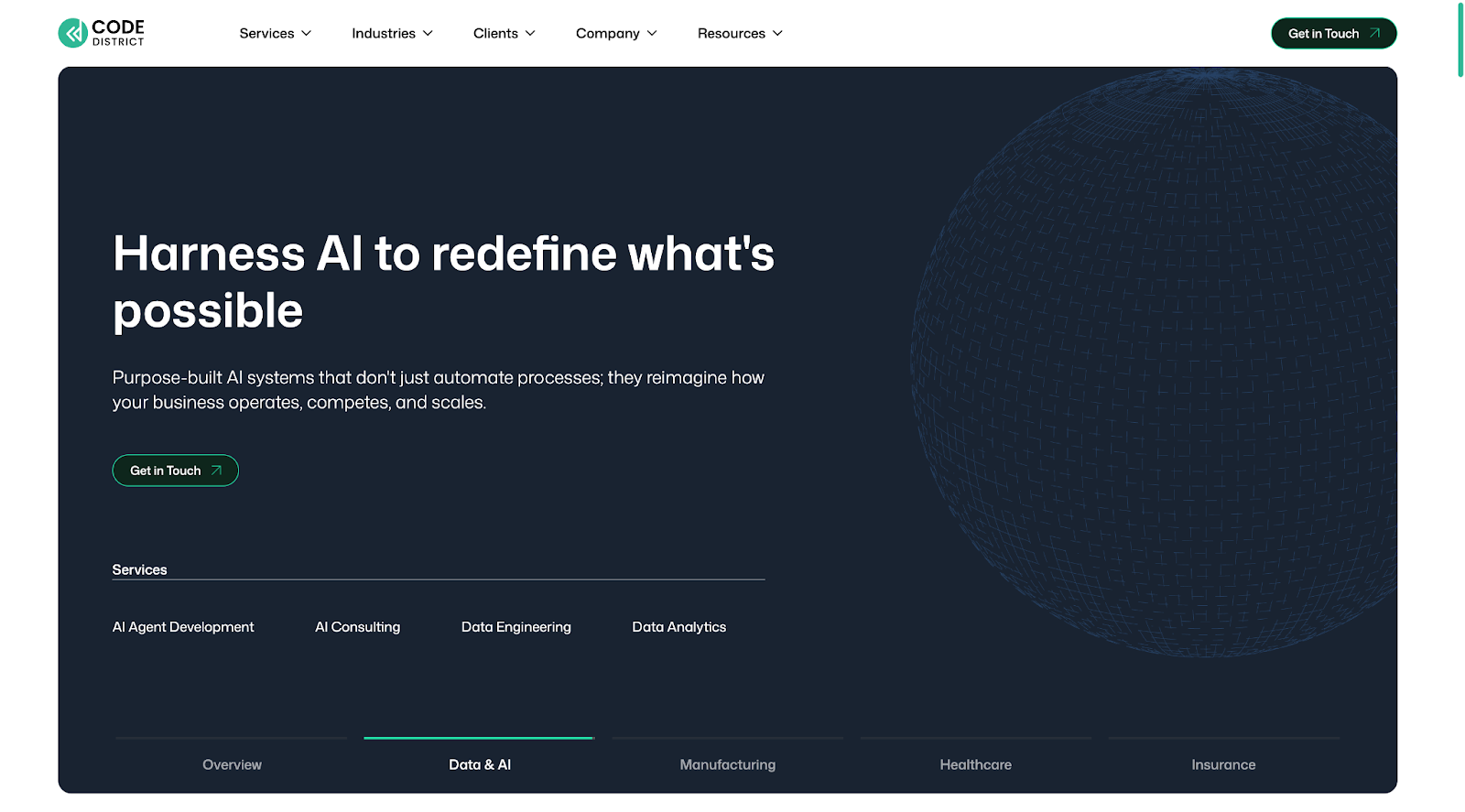
Code District supplies budget-friendly MVP delivery centered on disciplined scope governance. Their squads regularly craft cross-platform MVPs intended for initial market experiments.
Why we chose them: Compelling economics for startups requiring swift turnaround and unambiguous scope handling.
Notable strengths: Foreseeable timelines and candid estimates maintain budget discipline. An apt match for founders hunting a reliable MVP development agency while managing right runway.
Upsilon Labs
Year founded: 2015
Hourly rate: < $25 / hr
Team size: 2 - 9
Min project size: $1,000+
Clutch rating: 4
Key services: Product strategy, UI/UX, MVP software development company services.
Upsilon focuses on product discovery and MVP validation, coupling strategic insight with hands-on delivery. Their methodology revolves around hypothesis trials and user-driven feedback.
Why we chose them: Transparent product strategy guidance paired with polished UX delivery for nascent ventures.
Notable strengths: Structured discovery workshops and user research curb unnecessary engineering. This empowers teams to settle on the right MVP development scope prior to intensive construction.
S-PRO
Year established: 2014
Hourly rate: $25 - $49 / hr
Team size: 50 - 249
Min project size: $25,000+
Clutch rating: 5
Key services: Fintech, healthcare, AI, product development, cloud.
S-PRO ships intricate MVPs for heavily regulated verticals and data-intensive products. Their engineers are familiar with compliance mandates and extensible system designs.
Why we chose them: Deep vertical knowledge combined with a dependable MVP development process for elaborate products.
Notable strengths: Regulation-conscious delivery and data-protection experience prove essential for fintech and healthcare MVPs. Proficient integration work additionally compresses launch timelines.
Biz4Group LLC
Year founded: 2003
Hourly rate: $25 - $49 / hr
Team size: 50 - 249
Min project size: $10,000+
Clutch rating: 5
Key services: IoT, enterprise software, mobile app development, web development
Biz4Group LLC concentrates on innovation-driven MVPs incorporating IoT and enterprise-tier demands. Their workflow spans discovery, prototype crafting, and staged rollouts.
Why we chose them: Hands-on background with connected devices and complete project lifecycle coverage.
Notable strengths: IoT rapid-prototyping and hardware-linked MVPs set them apart. This appeals to startups engineering software solutions interlocked with physical devices or sensor networks.
Digital Scientists
Year founded: 2007
Hourly rate: $150-$199
Team size: 10-49
Min project size: $25,000+
Clutch rating: 5
Key services: UX research, product strategy, custom software development
Digital Scientists constructs high-impact MVPs for enterprises and well-capitalized startups demanding rigorous discovery. They operate design-forward with research at the forefront.
Why we chose them: Pronounced strategic acumen and UX investigation geared toward risk mitigation.
Notable strengths: Intensive research and positioning exercises sharpen product-market fit. This proves advantageous for intricate B2B offerings and stakeholder-dense contexts.
Dualboot Partners
Year founded: 2018
Hourly rate: Undisclosed
Team size: 250 - 999
Min project size: $75,000+
Clutch rating: 5
Key services: Product strategy, MVP development services for startups, engineering
Dualboot Partners zeroes in on product strategy and MVP shipment, frequently rallying founders around scope boundaries and outcome indicators.
Why we chose them: Unmistakable product stewardship and robust stakeholder coordination.
Notable strengths: Product management support and founder coaching reduce early missteps. A good option when a startup needs strategic guidance in addition to development.
Goji Labs
Year founded: 2014
Hourly rate: $100-$149
Team size: 50 - 249
Min project size: $25,000+
Clutch rating: 5.0
Key services: Mobile app development, UX/UI, product strategy
Goji Labs delivers startup MVPs with a design-first approach, prioritizing usability and rapid iteration. They are well known for clean UX and fast MVP cycles.
Why we chose them: Premium design caliber and an established history with nascent-stage products.
Notable strengths: Investor-grade demos and refined UX elevate early traction. This suits consumer-oriented products where engagement risk is pronounced.
Konstant Infosolutions
Year founded: 2003
Hourly rate: $25 - $49 / hr
Team size: 250 - 999
Min project size: $5,000+
Clutch rating: 5
Key services: Web and mobile development, ecommerce, custom software development
Konstant Infosolutions supplies economical development backed by substantial throughput capacity. Their squads manage end-to-end MVP builds for startups and enterprises.
Why we chose them: Impressive output volume and wide-ranging technical scope.
Notable strengths: High throughput and flexible staffing allow quick ramp-ups. This helps teams manage iterative releases without switching vendors.
Technext Technosoft
Year founded: 2010
Hourly rate: Undisclosed
Team size: 50 - 249
Min project size: Undisclosed
Clutch rating: Not yet reviewed
Key services: SaaS, web development, MVP development services
Technext concentrates on templatized MVPs for SaaS, propelling teams from idea to go-live in compressed timelines. Their execution stays lean and geared toward startup realities.
Why we chose them: Ideal alignment for cost-aware SaaS founders.
Notable strengths: Brisk delivery paired with explicit documentation nurtures lean iterations. Valuable for preliminary SaaS validation when internal bandwidth is constrained.
Appinventiv
Year founded: 2014
Hourly rate: $25 - $49 / hr
Team size: 1,000 - 9,999
Min project size: $50,000+
Clutch rating: 4.5
Key services: Mobile app development, enterprise software, AI and automation
Appinventiv delivers large-scale product development anchored by deep mobile know-how. They back MVPs requiring eventual enterprise-level expansion.
Why we chose them: Substantial engineering horsepower and cross-platform execution.
Notable strengths: Enterprise connectors and mobile engineering rigor bolster elaborate product development. This resonates with startups targeting swift international growth.
Net Solutions
Year established: 2000
Hourly rate: $25 - $49 / hr
Team size: 250 - 999
Min project size: $50,000+
Clutch rating: 5
Key services: Product engineering, SaaS, custom software development
Net Solutions stands as a seasoned product engineering ally that handles MVP shipments and extended product evolution. Their engineers are thoroughly practiced in agile development.
Why we chose them: Battle-tested process rigor and comprehensive product engineering.
Notable strengths: Lifecycle stewardship and steady delivery squads curtail rework. A sound match for organizations seeking continuous software development services.
BairesDev
Year founded: 2009
Hourly rate: $50 - $99 / hr
Team size: 1,000 - 9,999
Min project size: $50,000+
Clutch rating: 5
Key services: Nearshore teams, enterprise software, MVP development partner services
BairesDev furnishes nearshore development squads for North American firms requiring velocity and overlapping work hours.
Why we chose them: Formidable capacity and consistent delivery for venture-funded startups.
Notable strengths: Nearshore collaboration and strong English proficiency improve coordination. This helps US startups ship MVPs with tighter feedback loops.
Simform
Year established: 2010
Hourly rate: $25 - $49 / hr
Team size: 1,000 - 9,999
Min project size: $25,000+
Clutch rating: 5
Key services: Cloud engineering, data, mobile app development
Simform crafts data-centric MVPs and guides teams in architecting extensible backends. Their emphasis lands on speed while upholding craftsmanship.
Why we chose them: Pronounced cloud proficiency and a dependable MVP development process.
Notable strengths: Cloud-native execution and data engineering capabilities fuel AI-driven MVPs. This proves beneficial when analytics or personalization sit at the product's core.
Vega IT
Year established: 2008
Hourly rate: $50 - $99 / hr
Team size: 250 - 999
Min project size: $25,000+
Clutch rating: 4.5
Key services: Product development, custom software development, UX
Vega IT has earned recognition for a robust engineering ethos and dependable shipments. They underpin MVP development for startups and enterprises operating in regulated verticals.
Why we chose them: Predictable results paired with an esteemed reliable MVP development partner standing.
Notable strengths: Long-term partnerships and stable teams reduce knowledge loss. Ideal for multi-phase product development with evolving requirements.
 Services Account
MVP Development Cost
MVP development cost shifts according to scope, target platform, and engagement structure. On average, a typical MVP requires 950 to 2,500 working hours spread across 4 to 6 months of active development. The resulting budget depends heavily on where your development team is located and how complex your feature set becomes.
Cost ranges by complexity:
- Simple MVP (landing page with basic functionality, single platform): $15,000–$50,000
- Medium-complexity MVP (mobile or web app with user accounts, payments, API integrations): $50,000–$100,000;
- Complex MVP (multi-platform app with advanced security, real-time data, third-party integrations): $100,000–$250,000+
Key factors affecting MVP development cost:
- Feature scope: every additional screen, integration, or user role multiplies hours;
- Platform choice: building for iOS, Android, and web simultaneously costs more than a single-platform launch;
- Design requirements: custom UI/UX research and prototyping add 15–25% to the budget;
- Technology stack: niche frameworks or bleeding-edge tools may require specialized (and pricier) talent;
- Team location: hourly rates range from $20–$50 in Asia to $100–$200 in the US;
- Timeline pressure: accelerated delivery often demands larger teams and higher rates.
Pricing models: Fixed-price contracts fit clearly bounded scopes yet can constrain adaptability when priorities evolve. Hourly or time-and-materials arrangements are widespread in agile development, particularly when discovery remains active, and user learnings steer iteration. Dedicated team setups perform well for startups desiring a long-term development partner and continuous product development. Across all models, custom software development for an MVP should encompass design, implementation, testing, foundational analytics, and documentation.
Hidden and ongoing costs: Anticipate recurring expenses like cloud hosting, monitoring tools, security patches, and post-launch refinements. A thriving MVP frequently sparks accelerated follow-on development, so budget a maintenance reserve of 15–20% annually.
Cost optimization strategies
To trim expenses without impairing quality, concentrate on scope rigor instead of rate-hunting alone. Eliminate non-critical features, aim for a single platform at debut, and commit to a thorough discovery phase so the development team constructs only proven features. Reusable modules, shared design systems, and an explicit MVP development process curtail rework.
Startups may further economize by building incrementally: an internal beta first, followed by a limited public rollout, then a scalable iteration. This phased strategy synchronizes development costs with user feedback while sustaining forward motion.
Regional Comparison: US vs Europe vs Asia MVP Development
Location has a clear impact on hourly rates and delivery style. US-based agencies often provide tight timezone alignment and strong investor confidence, while European teams provide solid engineering value with high quality. Asia can be the most cost-effective for early validation, but may introduce communication or timezone friction. Consider legal frameworks, IP protections, and payment terms as part of the decision, especially for startups planning to raise capital or enter regulated markets.
*according to the latest info presented by Remotecrew
In practice, region choice also affects culture, legal recourse, and operational speed. For example, teams in similar time zones can run daily standups without delays, while far-apart teams may need more documentation and asynchronous communication. Startups that rely on rapid experiments often prefer higher-cost regions because the feedback loop is shorter. Teams with strong product management can work well with offshore delivery by defining clear acceptance criteria and using shared tools for design and QA. Consider language fluency, contract terms, and the ability to scale beyond the MVP if traction grows.
When choosing the right MVP development company, balance total cost with delivery risk, communication style, and required expertise. A reliable MVP development partner is not always the cheapest option, but they can reduce rework and shorten time to market. Many startups choose a hybrid approach, keeping product management in-house while outsourcing development to an experienced agency for faster execution.
How to Choose the Right MVP Development Company
Selecting the right MVP development partner can determine whether your idea reaches the market quickly or gets stuck in endless iterations. This section outlines the key factors to consider when choosing a team that can validate, build, and scale your product effectively.
Define Your MVP Scope and Budget
Start by clarifying the core problem, the minimum feature set, and the target users. A clear scope allows a startup MVP development company to estimate accurately and avoid scope creep. Write down assumptions, success metrics, and a timeline so the development partner can plan tradeoffs.
Research and Create Shortlist
Build a shortlist of MVP development agencies with experience in your industry. Use review platforms, case studies, and peer referrals to identify a development partner with a strong reputation. Look for repeated delivery in adjacent domains rather than a single flashy project.
Evaluate Portfolios
Look for evidence of similar products, technical complexity, and measurable outcomes. Great MVP development companies show how they validate ideas, not just how they build software. Prefer teams that explain tradeoffs and why a specific scope was chosen.
Read Client Reviews Strategically
Client reviews on Clutch, G2, and GoodFirms reveal how a company handles communication, timelines, and change requests. Seek feedback about transparency and project management. Pay attention to reviews that discuss post-launch support and long-term collaboration.
Conduct Discovery Calls
Discovery calls should test alignment, problem understanding, and team fit. A strong agency asks about users, metrics, and business risks before discussing features. You should also assess whether the agency can challenge your assumptions constructively.
Request Detailed Proposals
Ask for a proposal that includes milestones, assumptions, success criteria, and a risk plan. This helps you compare MVP software development agencies fairly. Clear acceptance criteria and delivery cadence reduce surprises during execution.
Check References
Speak with previous clients to confirm delivery quality and post-launch support. This is often the most reliable indicator when choosing the right MVP development company. Ask about budget accuracy and how changes were handled.
 Services Account
Red Flags
Also, you should pay attention to some of the typical red flags you may notice:
- Unrealistic promises about timelines or costs for complex MVPs.
- No discovery phase or product strategy support before development.
- Poor communication or unclear ownership of decisions.
- No testing process or QA discipline in the development process.
- Offshore delivery without a dedicated project manager.
- Cheap rates with hidden costs or vague scope boundaries.
- No post-launch support or roadmap planning.
- Pressure to sign fast without a clear contract.
MVP Development Process
A structured MVP development process helps startups move fast without sacrificing quality. Below, we break down the essential stages that turn an idea into a testable, market-ready product.
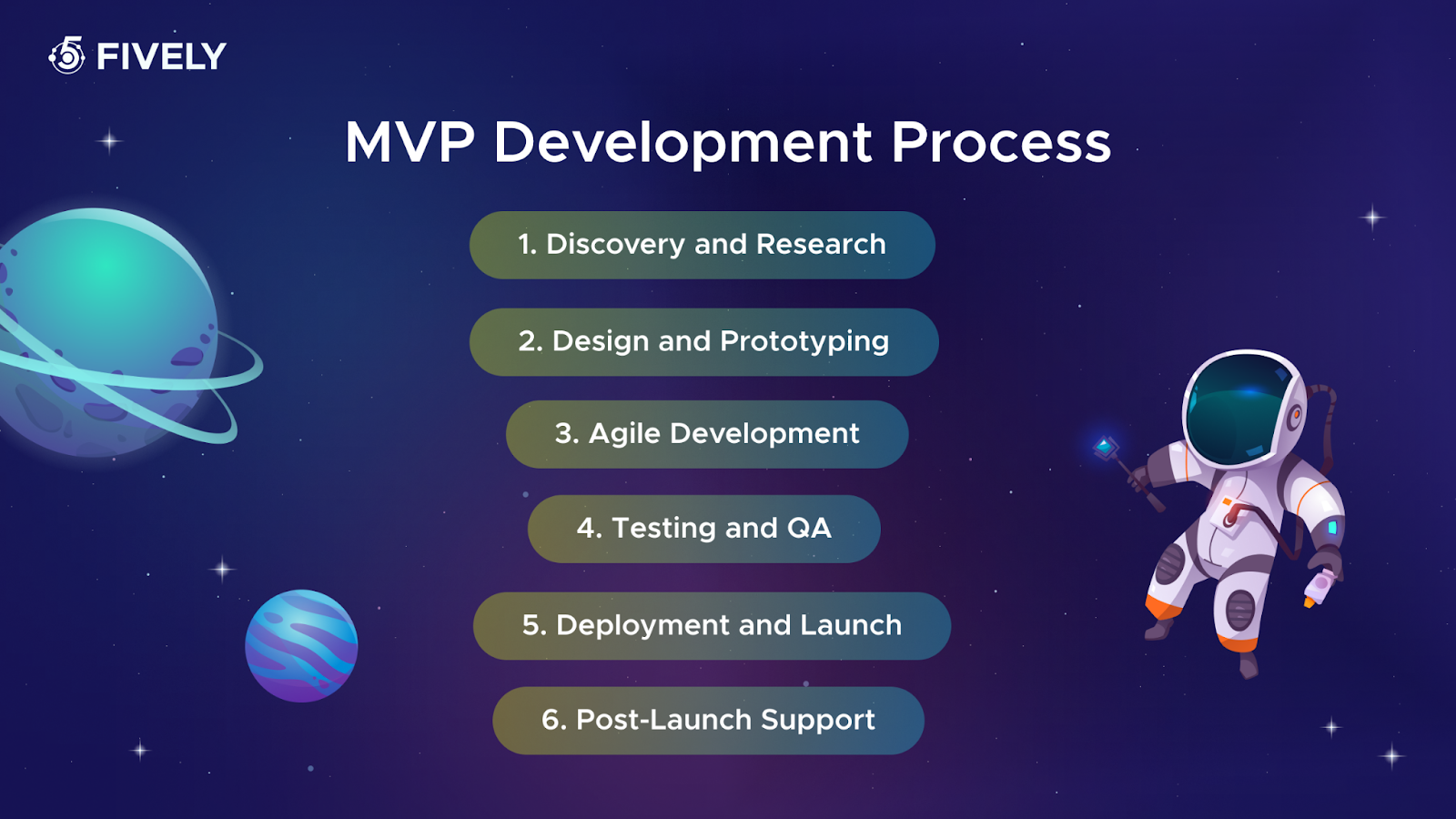
Discovery and Research
Discovery validates the market, clarifies user problems, and turns assumptions into testable hypotheses. This step defines the MVP scope and the key success metrics. A strong discovery phase includes competitive analysis, user interviews, and risk mapping.
Design and Prototyping
Design and development teams align on user flows, wireframes, and a clickable prototype. Prototypes reduce risk by testing usability before engineering. Early validation with a prototype saves development costs and avoids rework.
Agile Development
Agile development turns the scope into short sprints, delivering core features quickly. Continuous feedback and demos keep the development team aligned with business goals. This is where most MVPs refine their scope based on real user feedback.
Testing and QA
QA ensures stability, security, and performance before launch. Automated tests and manual checks minimize production risks. Even lightweight MVPs should include regression tests and performance baselines.
Deployment and Launch
The MVP is released with analytics, basic monitoring, and a release checklist. This is where product feedback becomes measurable data. A phased rollout can reduce risk for products with sensitive workflows.
Post-Launch Support
After launch, teams fix issues, prioritize features, and improve reliability. A strong MVP development partner supports iteration throughout the development lifecycle. Post-launch support also includes monitoring costs, security updates, and performance tuning.
Post-Launch Strategy
- Monitoring and Firefighting: Track uptime, errors, and performance to protect early users and reputation.
- Initial Optimization: Improve onboarding speed, load times, and core journeys based on analytics.
- Feature Validation: Test new ideas with targeted releases before full development.
- Scale or Pivot Decision: Use real data to decide whether to scale, pivot, or sunset the MVP.
 Services Account
Future Trends
MVP development continues to evolve alongside new technologies and startup methodologies. Here are the key trends shaping how products will be validated, built, and scaled in the coming years.
The Rise of Vibe Coding and AI-Assisted Development
AI-assisted development accelerates scaffolding, testing, and documentation, allowing startups to build an MVP faster without sacrificing quality. Teams are increasingly pairing AI tools with human review to improve consistency and reduce defects.
Cloud-Native Architecture (AWS Lambda)
Serverless stacks like AWS Lambda reduce infrastructure overhead and support rapid iteration for lean MVPs. Cloud-native designs also simplify scaling when early traction arrives.
Security-First Development
Security is shifting left, with threat modeling and secure defaults applied even for early-stage MVPs. This reduces compliance risk and protects user trust from day one.
No-Code and Low-Code Acceleration
No-code and low-code tools speed validation and reduce early development costs, especially for internal tools and simple workflows. Many agencies now blend no-code experiments with custom development for core logic.
Final Recommendations
If you have a budget under $30K, Eastern European agencies often deliver the best value. If you need a rapid launch in 8-12 weeks, prioritize teams with proven agile development practices and a well-defined MVP process. For regulated industries, US-based agencies can reduce compliance risk and support investor requirements. Startups seeking funding should pick a development partner with strong case studies and clear communication habits. A reliable MVP development company that helps startups can turn early ideas into a successful MVP and a scalable product roadmap.
Before you sign, run a short discovery sprint or paid workshop. This gives you clarity on scope, validates priorities, and helps you evaluate the development team in real conditions. Ask for a roadmap that connects features to business outcomes, and ensure the agency can support post-launch strategy, not just the initial build. The right MVP development partner will guide you through feature validation, optimization, and future scaling. With a clear plan and the right development partner, your MVP becomes a learning engine that de-risks product development and improves investor confidence.
 Services Account
Need Help With A Project?
Drop us a line, let’s arrange a discussion
Frequently Asked Questions
A bespoke MVP development company builds a custom solution tailored to your specific market, users, and constraints instead of a generic template. This approach favors unique workflows, brand differentiation, and long-term scalability.
You gain a focused development team, a proven MVP development process, and product strategy support that reduces risk and improves time to market. A strong partner also helps prioritize features and manage technical debt early.
Red flags include no discovery phase, unclear communication, or promises that ignore realistic development costs and timelines. A lack of testing or post-launch support is another signal to pause.
Prioritize proven industry experience, strong reviews, transparent pricing, and a process that includes discovery, design, and QA. Ask about security practices and how they handle rapid iteration.
US-based agencies offer alignment and legal clarity, while offshore teams often reduce costs. The best choice depends on budget, timezone needs, and risk tolerance. Many startups combine US product leadership with offshore delivery for speed and cost balance.
Most MVPs take 8-16 weeks depending on scope, platform, and the size of the development team. Discovery and design usually take 2-4 weeks, while development and QA take 6-12 weeks.
A typical US-based MVP can range from $50,000 to $150,000 based on complexity and team composition. Products that require compliance or integrations can push the cost higher.
Common industries include fintech, healthcare, ecommerce, SaaS, logistics, and mobile-first consumer apps. Agencies also serve education, proptech, and B2B marketplaces where fast validation is essential.


